A — Avant-Garde Beginnings
It all began with silence.
No fanfare, no flashing lights — only a quiet rebellion rising from Tokyo in 1969.
Rei Kawakubo, a young visionary, questioned everything fashion stood for.
Why beauty? Why symmetry? Why rules?
Her label, Comme des Garcons — “like boys” — wasn’t about femininity or masculinity.
It was about freedom.
“I didn’t want to design clothes that already existed.”
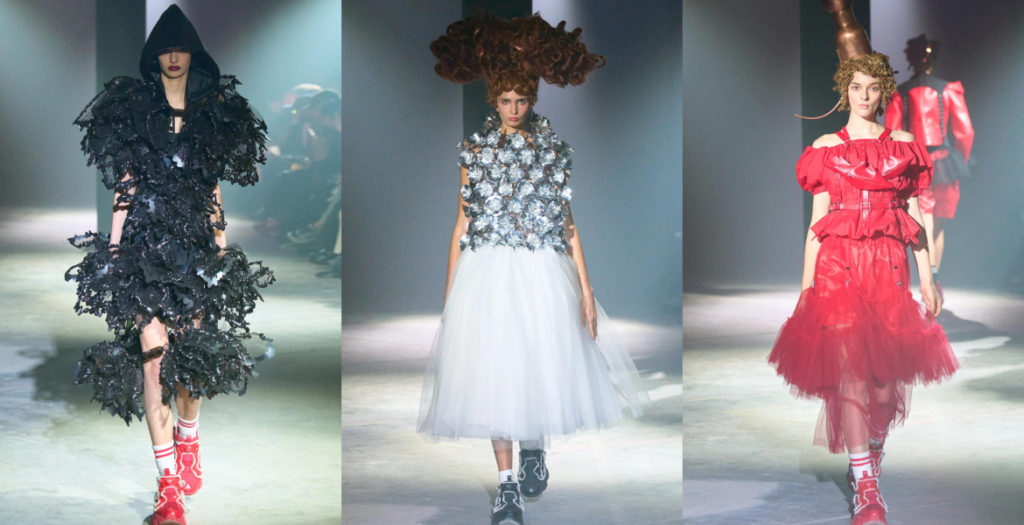
With torn fabrics, black voids, and asymmetrical cuts, Rei built something rare:
fashion that made you think.
B — Bold Philosophy
Fashion, for Rei, was not decoration — it was expression.
While Paris chased glamour and New York pursued commerce, she chased ideas.
Her clothes were questions disguised as garments.
She once described her work as “the space between beauty and ugliness.”
That space became her playground — and later, America’s fascination.
C — Cultural Collision
When Comme des Garcons touched down in the U.S. during the early 1980s, the reaction was mixed.
New York — loud, brash, obsessed with luxury — suddenly met something quiet and radical.
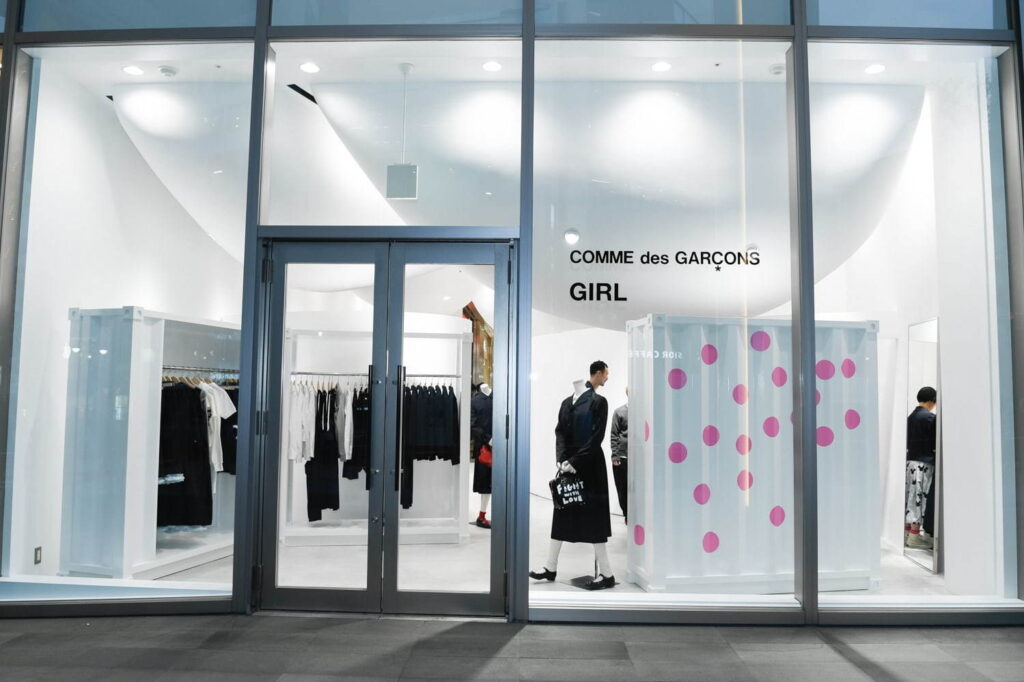
The brand’s SoHo store felt more like a gallery than a boutique:
- stark white walls,
- harsh lighting,
- absolute silence.
Americans didn’t just shop there.
They reflected.
For the creatives, the artists, the thinkers — this was revelation, not confusion.
D — Defining the Disruption
What Rei did was more than fashion.
She redefined beauty itself.
Her clothes didn’t flatter the body — they challenged it.
They spoke in structure, imbalance, and shadow.
The press called it “anti-fashion.”
But to those who understood, it was pure philosophy in motion.
E — Embracing Imperfection
Rei Kawakubo believed that beauty could be found in the broken, the incomplete, the undone.
This aesthetic — the Japanese concept of wabi-sabi — became her signature.
In the U.S., a culture obsessed with perfection, her imperfect beauty felt shocking — and liberating.
“Fashion is alive when it’s not perfect.”
Every frayed edge was a metaphor for freedom.
F — From Paris to New York
After conquering Paris in 1981, Rei’s next frontier was New York.
Her first store opened quietly — like her.
And yet, whispers spread quickly through downtown fashion circles.
Editors, stylists, and painters gathered around her work as though studying fine art.
Each garment carried a presence —
a mixture of intellect and emotion that American fashion had never seen before.
G — Garments as Language
Rei doesn’t talk much.
Her designs do the speaking.
Every piece she creates says something:
- about fear,
- about identity,
- about the tension between chaos and order.
Her shows are not collections — they’re manifestos.
H — Heart on the Sleeve: PLAY
Then came 2002.
A small red heart appeared. ❤️
The world smiled.
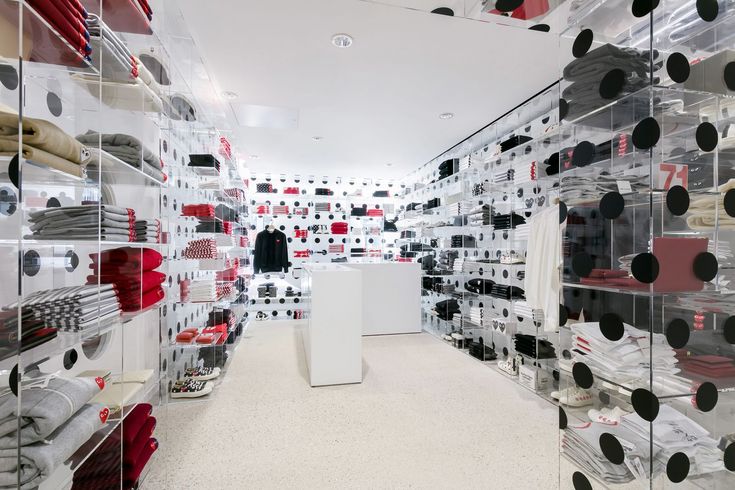
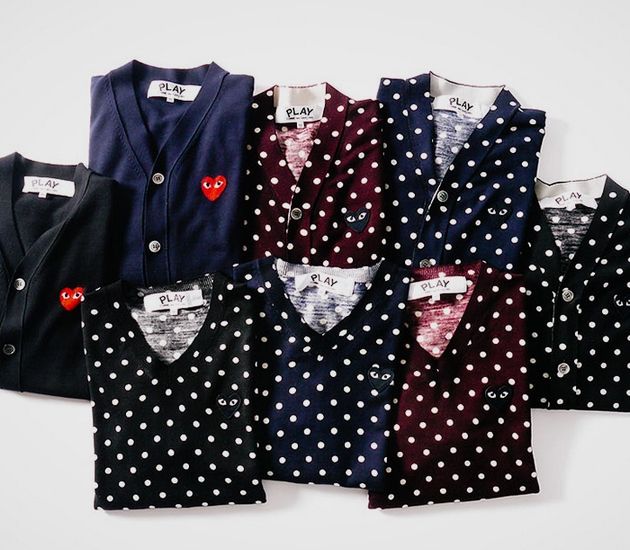
Comme des Garcons PLAY — the label’s softer, accessible line — became the heartbeat of the brand’s American presence.
It was simplicity reborn:
clean cotton tees, striped knits, that iconic heart with eyes by artist Filip Pagowski.
Suddenly, Comme wasn’t just on runways — it was on the streets.
In Brooklyn, in Los Angeles, in Chicago — the heart became a quiet symbol of taste and intellect.
I — Icons of Influence
Across the U.S., Comme des Garcons has been worn and celebrated by:
- 🕶️ Pharrell Williams — a minimalist visionary.
- 🎤 Rihanna — a fearless performer.
- 🖤 Kanye West — inspired by Rei’s philosophy.
- 💄 Lady Gaga — who turns fashion into theatre.
Each one interprets Comme not as clothing, but as concept.
They wear Rei’s vision — and carry it into American pop culture.
J — Junya, the Protégé
Every legend leaves a legacy.
Rei’s is Junya Watanabe — once her apprentice, now her ally.
His work under the Comme des Garcons umbrella brought technical innovation, deconstruction, and fresh energy.
Together, they built a design language that still defines avant-garde fashion today.
K — Kawakubo’s Philosophy
If Rei had a motto, it would be simple:
“Creation comes from conflict.”
Her U.S. fans — intellectuals, stylists, artists — understood that instinctively.
They saw in her work the same tension that built America itself: chaos, freedom, and reinvention.
That’s why Comme des Garcons doesn’t feel foreign here.
It feels familiar.
L — Legacy of PLAY
While her runway designs remained high art, PLAY turned into a lifestyle.
In the U.S., it became the entry point for a generation that wanted meaning with their minimalism.
The brand’s success wasn’t loud. It was steady.
And more importantly — it stayed true.
M — Minimalism Meets Emotion
Unlike cold minimalism, Rei’s minimalism breathes.
It’s emotional, intellectual, even spiritual.
Her American fans describe her work not as “fashion” but as “experience.”
To wear Comme is to feel part of something larger —
a quiet conversation between artist and wearer.
N — New York: The Beating Heart
No city has embraced Comme des Garcons like New York.
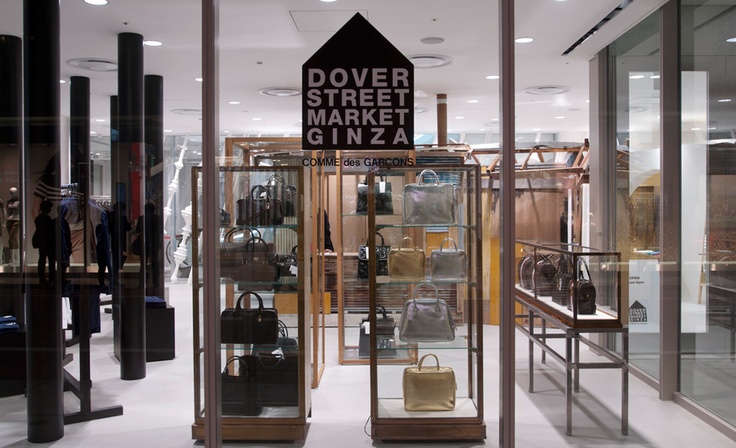
From its first boutique in SoHo to the arrival of Dover Street Market in 2013, the brand became woven into the city’s creative DNA.
At DSM, you don’t just shop —
you explore.
Every corner offers a surprise:
- silver scaffolding,
- concrete installations,
- garments hanging like sculpture.
This is not retail.
It’s ritual.
O — Opening Doors: Dover Street Market
Dover Street Market (DSM) is Rei’s masterpiece beyond the runway.
She designed it as a living gallery, not a store.
Each floor transforms regularly — a reflection of constant evolution.
Brands coexist like artworks.
Comme, Junya, The Row, Off-White, Sacai — all part of one creative dialogue.
Visitors don’t just leave with clothes.
They leave with inspiration.
P — Philosophy Meets Pop Culture
What’s remarkable is how a label so intellectual became so beloved in pop culture.
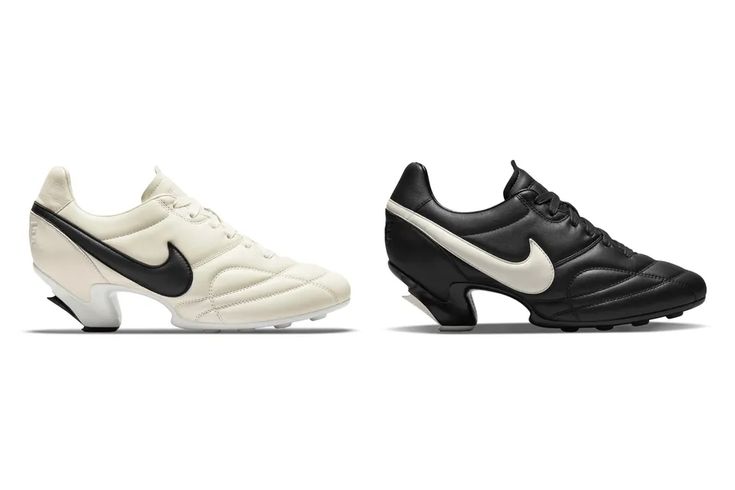
From music videos to sneaker collabs, Comme des Garcons infiltrated America not by advertising —
but by authenticity.
Each collaboration — with Nike, Supreme, or Converse — carried Kawakubo’s DNA:
raw, poetic, fearless.
Fashion didn’t absorb her.
She absorbed fashion.
Q — Quiet Confidence
Rei Kawakubo never shouts.
Her work never begs attention.
Yet, wherever you look — from Brooklyn cafes to fashion editorials — her presence is unmistakable.
Her silence became her signature.
R — Redefining Gender
Decades before it became a movement, Rei erased gender lines.
Her clothes never cared for “men’s” or “women’s” — only for human expression.
Today’s genderless trend owes its existence to that fearless disregard for limits.
In America, her designs helped inspire a new generation of inclusivity and self-definition.
S — Subtle Street Influence
Rei’s genius? She never chased streetwear — streetwear came to her.
When Comme des Garcons met brands like Supreme, it wasn’t about hype.
It was about dialogue.
She showed that luxury and youth culture can coexist —
without losing their souls.
T — Timeless Relevance
Five decades on, Comme des Garcons remains timeless — not by staying the same,
but by constantly asking, “What’s next?”
The brand evolves with no nostalgia, no repetition, no compromise.
Every season, Rei reinvents what fashion can be.
U — Unapologetic Vision
Rei never softened her message for the market.
Even in the U.S. — a country built on trends — she stayed rooted in integrity.
Her followers admire her not for what she makes, but for what she stands for:
freedom, independence, and thought.
V — Visionaries Who Followed
Rei’s influence birthed a generation of American designers who see fashion as art:
- Rick Owens
- The Row
- Fear of God
- Eckhaus Latta
Each carries a piece of her spirit — restraint, depth, rebellion.
W — What America Learned
Before Comme, American fashion was often about surface.
After Comme, it began to search for soul.
Rei showed the U.S. that fashion could be conversation, not consumption.
She transformed the runway into reflection.
X — X-Factor: The Mystery
No press interviews. No personal showmanship.
Rei Kawakubo’s anonymity is her superpower.
She lets her work speak —
and in that silence lies her magnetism.
Y — Youth and the New Generation
Today’s youth — raised on digital noise — find peace in her quiet rebellion.
They wear Comme not to belong,
but to express individuality.
In an age of oversharing, Rei’s restraint feels revolutionary.
Z — Zenith of Modern Fashion
Half a century later, Comme des Garcons in the USA stands at the zenith of modern fashion.
It’s no longer a foreign import —
it’s part of the American story.
From avant-garde runways to graffiti-covered walls,
from quiet studios to Dover Street Market floors —
Rei Kawakubo’s vision lives on.
Not as fashion.
But as philosophy.
🕊️ Final Thought
Comme des Garcons didn’t conquer America by shouting louder.
It did it by whispering smarter.
It showed a nation built on expression that the greatest statement is sometimes silence.