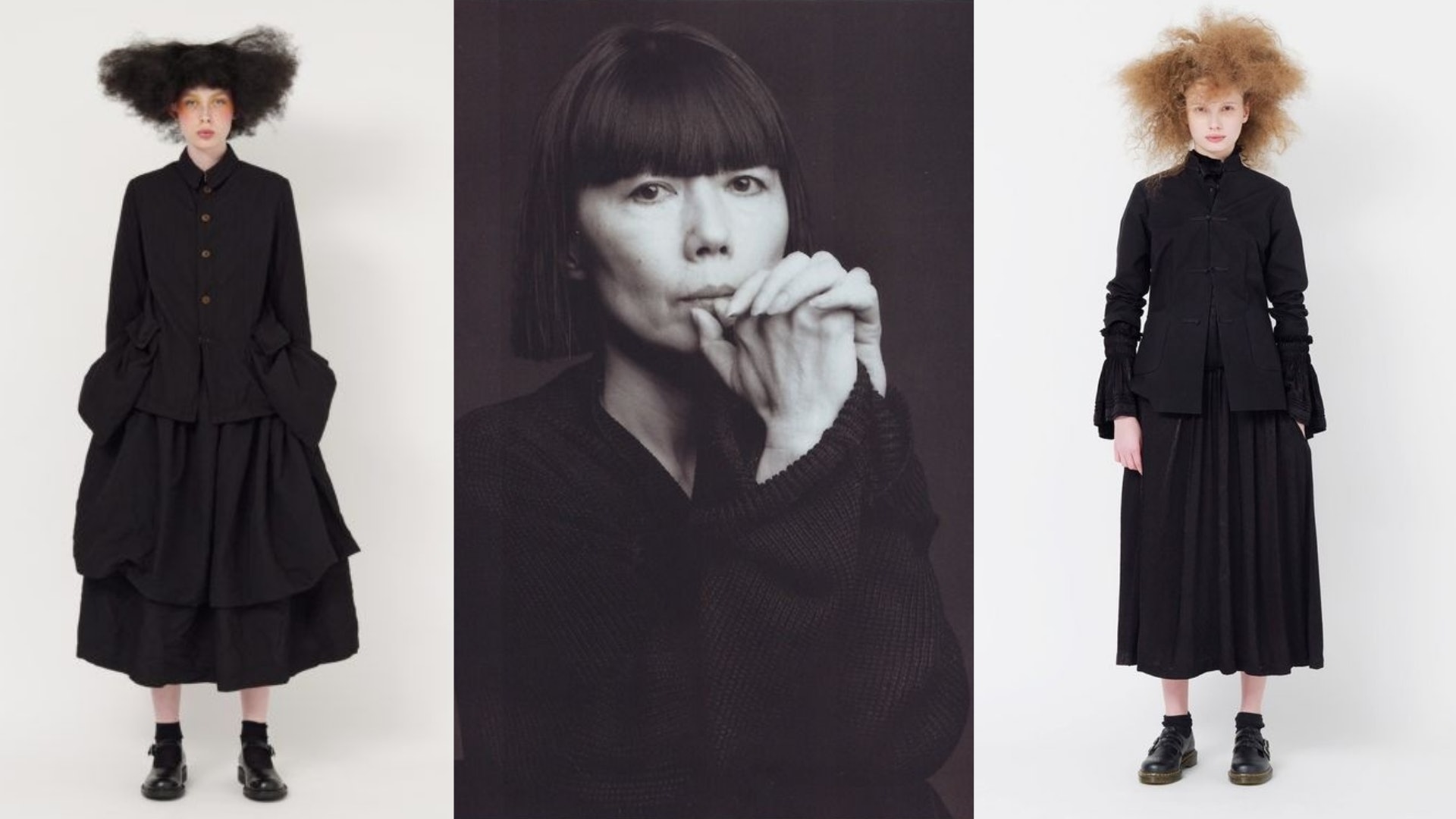
How Rei Kawakubo turned a quiet corner of London into the beating heart of global avant-garde culture.
🖤 Introduction: When Rebellion Found a Home
There are few names in fashion that carry the weight of Comme des Garcons.
Founded by Rei Kawakubo in Tokyo in 1969, the label has always existed at the edge of convention — a universe where imperfection, abstraction, and emotion outweigh glamour.
But the most fascinating chapter of this story unfolded far from Japan.
In London, Comme des Garcons found not only an audience, but a soulmate.
The British capital’s raw creativity and anti-establishment energy gave Kawakubo the perfect stage to realize her boldest dream — Dover Street Market.
💡 The Rise of Comme des Garcons: Philosophy Over Fashion
Rei Kawakubo is not a traditional designer.
With no formal fashion training, she approaches clothing as an artist approaches form — as an idea first, an object second.
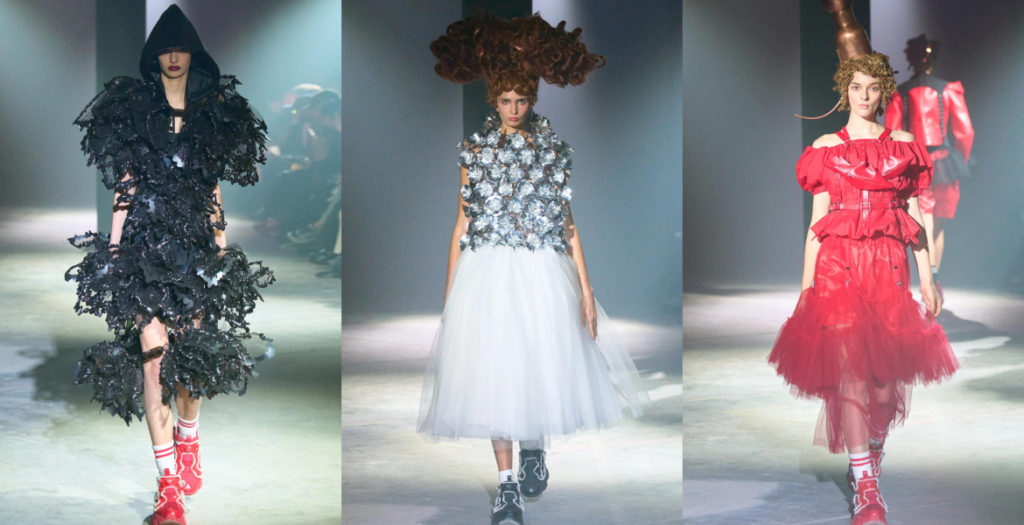
Her designs are sculptural and conceptual: torn fabrics, oversized silhouettes, and fragmented symmetry. Each collection is less about wearability and more about expression.
When Comme des Garcons debuted in Paris in the early 1980s, it shocked the fashion world. Reviewers called it “anti-fashion.”
Kawakubo called it truth.
Her rebellion wasn’t loud — it was intellectual.
She showed that beauty can be found in tension, and that imperfection can be perfection.
🇬🇧 Why London Was the Perfect Canvas
London has always been a city that celebrates creative disruption.
From punk’s rebellion in the 1970s to the rise of contemporary British fashion, it thrives on contradiction and individuality.
By the early 2000s, London’s cultural landscape was shifting again. Streetwear was merging with luxury, art was crossing into retail, and traditional boutiques were losing their edge.
Enter Rei Kawakubo, armed not with trends but with philosophy.
She saw London as more than a marketplace — she saw it as a laboratory.
In 2004, she and her husband Adrian Joffe opened a revolutionary concept store in Mayfair.
Its name would soon become legendary: Dover Street Market.
🏛️ Dover Street Market: The Birth of Beautiful Chaos
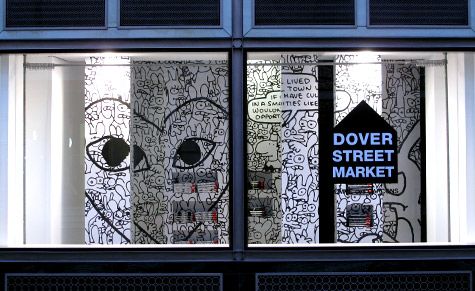
From the outside, it looked like just another Georgian building.
Inside, it was something the fashion world had never seen before.
Dover Street Market (DSM) wasn’t designed to sell; it was designed to provoke.
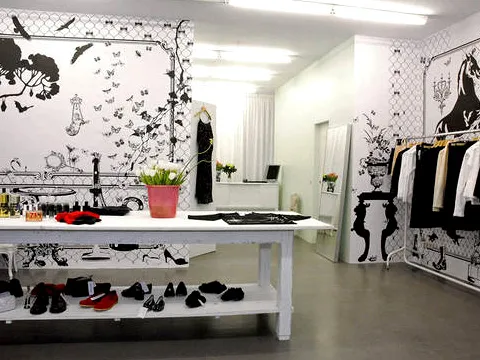
Concrete floors, exposed steel, recycled wood, and asymmetrical walls turned luxury on its head.
Each brand inside — from Gucci and Rick Owens to NikeLab and Simone Rocha — was invited to build its own universe.
Every floor felt like a different reality, every corner a statement.
The concept was rooted in what Kawakubo calls “beautiful chaos” — the harmony that lives inside disorder.
“Creation takes place in the space of tension,” said Kawakubo.
Dover Street Market is that tension, made physical.
🎨 The Architecture of Emotion
Every element of DSM’s design tells a story.
It’s raw, imperfect, and constantly changing — because Kawakubo believes that to stay alive, creativity must never settle.
Twice a year, the entire space is dismantled and rebuilt in a ritual known as “New Beginning.”
Walls are torn down, installations reimagined, structures reborn.
The store becomes a living organism — forever transforming, forever new.
This constant renewal ensures that Dover Street Market never becomes predictable.
It’s not a store you visit once — it’s a place you experience repeatedly, each time discovering something different.
🛍️ Shopping as Cultural Theatre
Walking into DSM feels less like entering a shop and more like walking through a curated exhibition.
There is no hierarchy between brands — a Comme des Garcons jacket might hang beside a streetwear hoodie or a sculptural art installation.
Music hums softly in the background; staff, dressed in monochrome, move with the quiet confidence of gallery curators.
Every step feels intentional, every display an act of storytelling.
And at the top floor, Rose Bakery offers a serene counterpoint — the smell of espresso and baked goods grounding the avant-garde energy in something warm and human.
DSM isn’t just a marketplace.
It’s a mood, a philosophy, and a community.
🌍 Global Expansion: The London Idea Goes Worldwide
What began on Dover Street in London became a global phenomenon.
Following the success of the original, Kawakubo and Joffe brought the concept to:
- Tokyo (2006) — a spiritual return home
- New York (2013) — an industrial, multi-level art space
- Beijing (2018) — an architectural dialogue between East and West
- Los Angeles (2018) — a meeting point of fashion and celebrity culture
- Singapore (2021) — minimalist, precise, and elegantly chaotic
In 2016, the London store itself moved to a grander home in Haymarket, keeping its soul intact while expanding its reach.
Even as its walls changed, its spirit — that sense of “beautiful chaos” — remained untouched.
🎭 Comme des Garcons and London’s Creative Pulse
Few cities understand CDG like London does.
The city’s creative DNA — rebellious, ironic, daring — mirrors Kawakubo’s design philosophy.
Artists, designers, and stylists alike see her as a cultural north star.
Her work resonates with those who prefer thought over trend, concept over comfort.
Collaborations with British talents like Simone Rocha and Molly Goddard reinforce this dialogue between Japanese abstraction and British eccentricity.
For many Londoners, Dover Street Market isn’t a store — it’s a home for creative outsiders.
🧩 Collaboration as DNA
The magic of Dover Street Market lies in its collaborative spirit.
Each brand within its walls becomes part of a shared narrative.
Here, Gucci’s opulent installations coexist with Supreme’s minimal street energy.
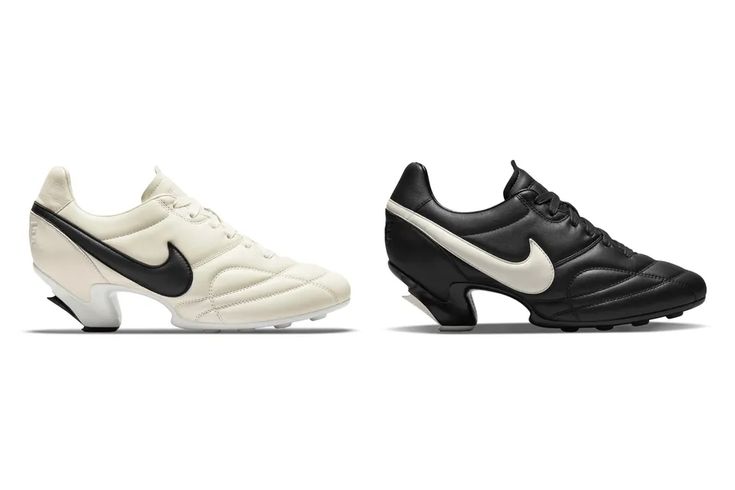
Thom Browne’s tailoring sits beside Nike’s experimental labs.
DSM eliminates hierarchy. Luxury and streetwear are equals.
The focus is on ideas, not labels — on connection, not competition.
This curatorial approach turned DSM into a cultural mirror of the 21st century: unpredictable, inclusive, and fiercely original.
🌸 Comme des Garcons Play: Simplicity with Soul
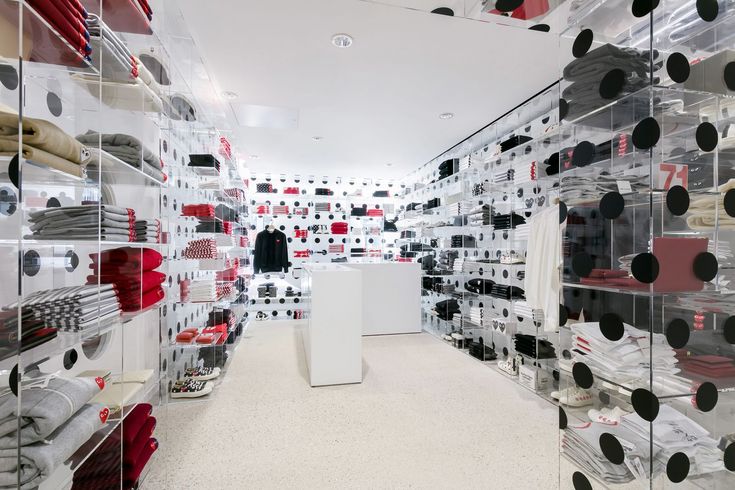
While Dover Street Market represents high-concept design, Comme des Garcons Play captures the brand’s accessible side.
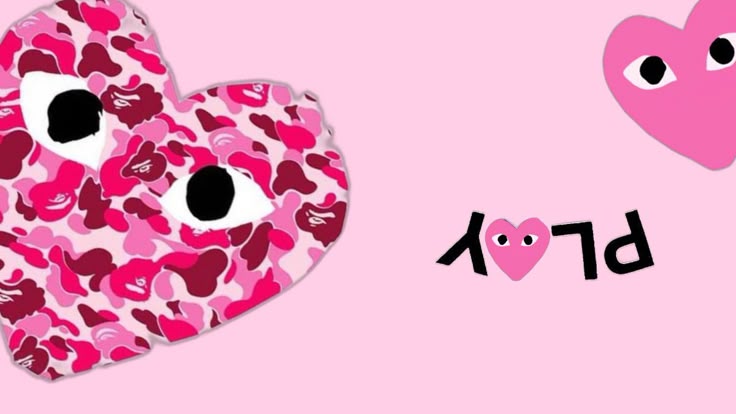
Launched in 2002 with its now-iconic red heart logo (designed by Filip Pagowski), Play brings Kawakubo’s philosophy to the everyday.
It’s minimalist, playful, and instantly recognizable — proof that concept and commercial success can coexist.
Through DSM, Play became a global phenomenon, offering a more approachable entry point to Kawakubo’s creative world.
💬 Critical Acclaim and Cultural Legacy
Fashion critics and thinkers have called Dover Street Market a revolution in how we understand shopping.
- Suzy Menkes described it as “a museum that sells what it exhibits.”
- Virgil Abloh once said, “Dover Street Market is the blueprint for all concept stores that followed.”
It didn’t just redefine retail — it redefined the relationship between fashion and culture.
DSM blurred the boundaries between commercial and artistic space, creating a model that continues to influence the fashion world today.
🕰️ The Legacy: London’s Living Work of Art
Two decades after its debut, Comme des Garcons in the UK remains a symbol of creative independence.
Through Dover Street Market, Rei Kawakubo built more than a store — she built a philosophical movement.
Her approach rejects trends, embraces imperfection, and honors the beauty of contradiction.
In a world of algorithmic fashion and fast consumption, DSM remains deeply human — tactile, emotional, and endlessly curious.
“The only meaning in life is creation,” Kawakubo once said.
Dover Street Market is that meaning — alive, evolving, and eternal.
🖋️ Conclusion: The Future of Beautiful Chaos
Comme des Garcons in the UK represents more than fashion; it’s a living experiment in art, emotion, and collaboration.
From its beginnings on Dover Street to its ongoing evolution in Haymarket, it has shown that true creativity isn’t about perfection — it’s about risk, reinvention, and truth.
London didn’t just host Comme des Garcons — it helped shape it.
And together, they built something timeless:
A place where fashion becomes philosophy, and commerce becomes culture.
In the quiet heart of London, beautiful chaos still thrives —
and its name is Dover Street Market.