TOKYO / 1970s / BLACK STREETS & NEON LIGHTS
No filters. No gloss. Just grit.
Tokyo was changing — a city pulsing between order and rebellion, between the hum of machines and the whisper of art.
And then came a quiet explosion — Rei Kawakubo — scissors in hand, rewriting fashion from the ground up.
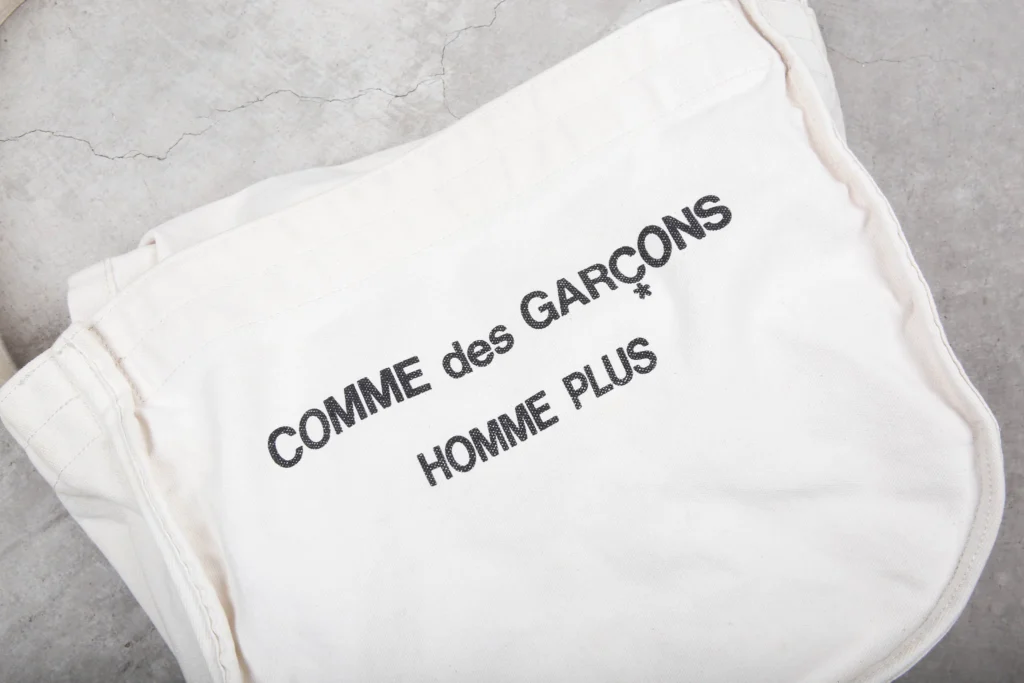
She called it comme des garcons.
“Like boys.”
Not gender. Not fashion. Just freedom.
➤ 1973 / THE YEAR THE SYSTEM GLITCHED
Fashion was too clean. Too perfect. Too polite.
Rei didn’t fit in — she broke the code.
✦ Fine arts degree → check.
✦ No formal design training → check.
✦ Total rebellion → absolutely.
She started making clothes because what she wanted didn’t exist.
That’s how revolutions begin — with absence.
Her aesthetic?
→ Black.
→ Oversized.
→ Uneven.
→ Emotional.
This wasn’t anti-fashion.
It was other-fashion.
⚫ THE UNDERGROUND ERA
Tokyo’s underground scene was rising — artists, punks, dreamers.
Shinjuku and Harajuku became laboratories of self-expression.
The uniform was rebellion.
And at the center: comme des garcons.
Rei’s studio felt more like a thought experiment than a business.
Models weren’t models — they were movement, attitude, resistance.
The crowd that followed?
They were called The Crows.
Black-clad, poetic, unbothered.
They didn’t consume fashion. They embodied it.
Walking art. Living protest. Tokyo in motion.
➤ AOYAMA — THE MOTHER SHIP
1975 → Aoyama.
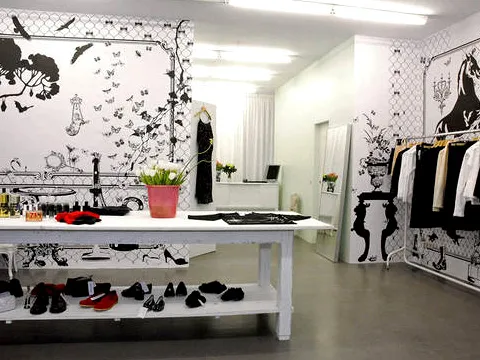
Rei opens her first boutique.
No decoration. No warmth.
Just white light, bare walls, silence.
The opposite of commercial Japan.
People didn’t shop there — they entered.
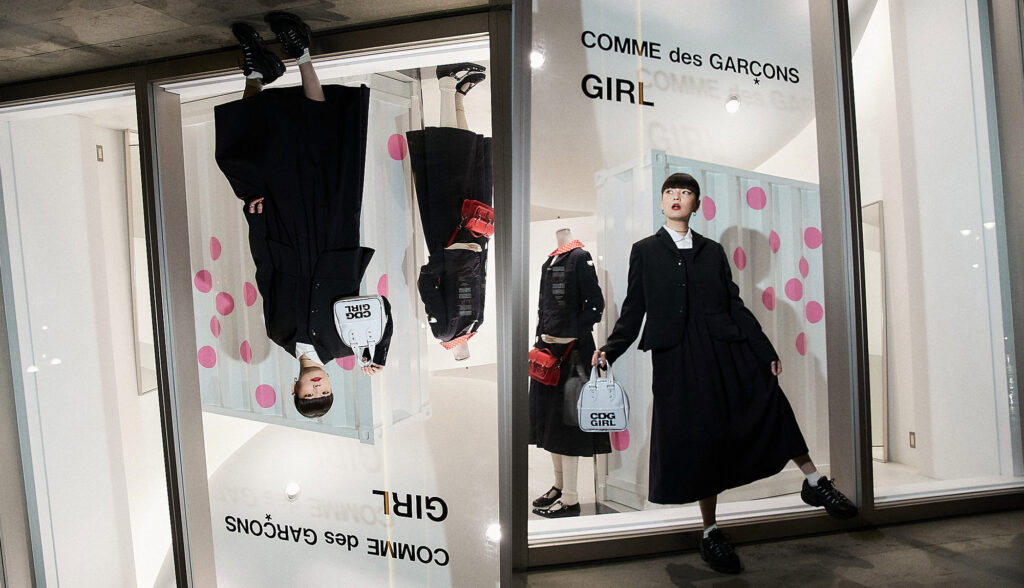
comme des garcons wasn’t selling clothes; it was selling a new consciousness.
The boutique became a base for the Tokyo avant-garde.
Students. Stylists. Thinkers.
They didn’t dress to impress.
They dressed to express dissonance.
⚡ 1981 / PARIS: BLACK INVADES
“The Japanese are coming.”
Paris didn’t know what hit it.
1981, Paris Fashion Week.
comme des garcons debuts.
Lights down.
Silence.
Models appear — wrapped in asymmetric black, faces bare, steps slow.
It was war, not fashion.
The French press called it “Hiroshima Chic.”
They didn’t understand it yet — they were witnessing a cultural detonation.
Beauty was no longer pretty.
Perfection was over.
Rei Kawakubo had changed the conversation.
“I create from emotion, not logic,” she said.
🖤 DECONSTRUCTION: BEFORE IT HAD A NAME
Everyone later called it deconstruction.
But Rei? She just called it truth.
She turned seams inside out.
Left hems raw.
Created shapes that resisted the human form.
Each garment was a question:
→ What is a body?
→ What is gender?
→ What is beauty?
Fashion didn’t know how to respond.
So it copied her.
⚔️ TOKYO STRIKES BACK — THE 1990s
The underground became mainstream.
Streetwear began to echo Kawakubo’s ideas — individuality over perfection.
Out of her empire came other visionaries:
✦ Junya Watanabe — tech and tailoring.
✦ Tao Kurihara — delicate rebellion.
✦ Kei Ninomiya — structural chaos.
Tokyo became fashion’s heartbeat — part punk, part philosophy, all style.
comme des garcons wasn’t a label anymore.
It was an ecosystem.
➤ 2002 / THE HEART GETS EYES
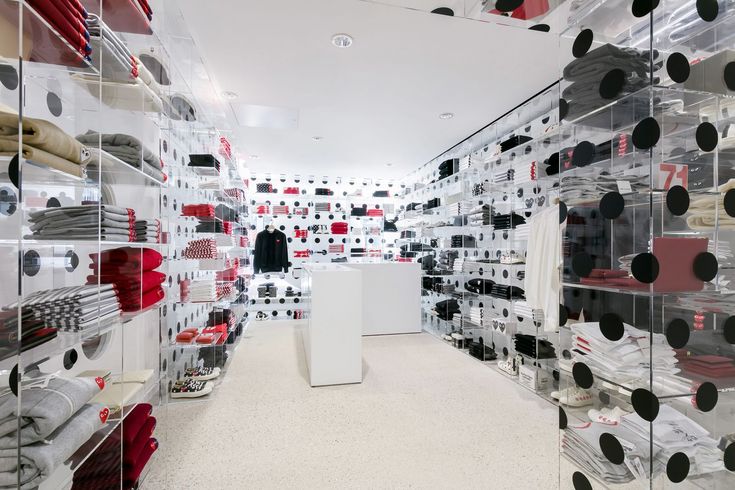
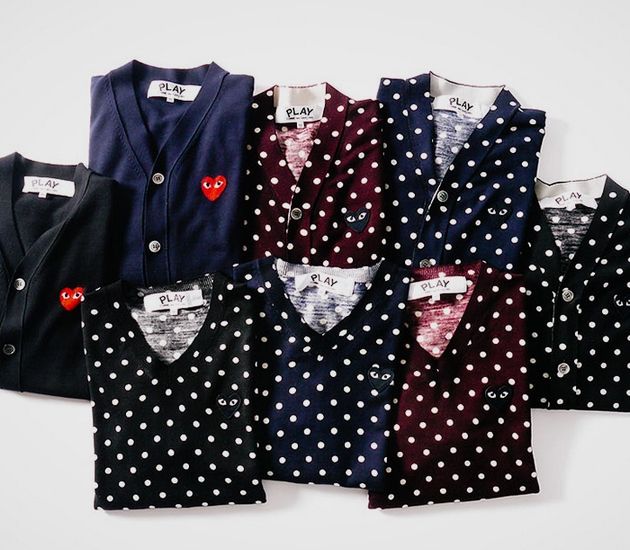
That little red heart 👁 — imperfect, hand-drawn, human.
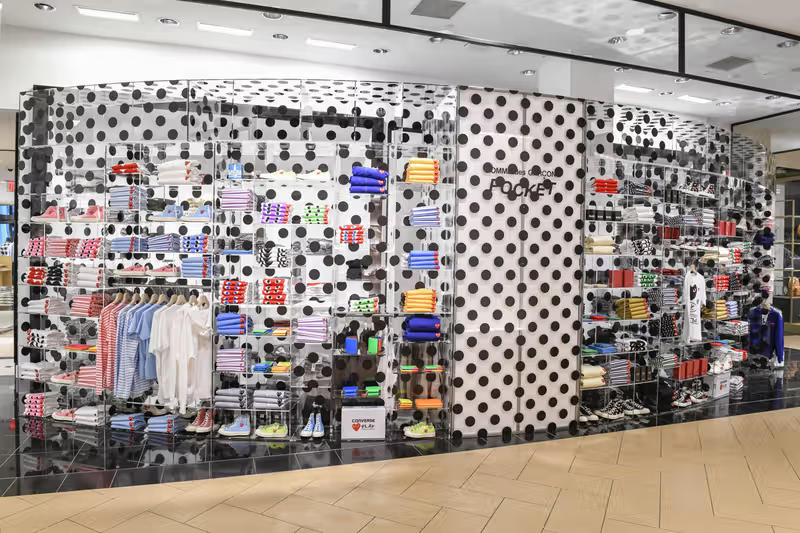
comme des garcons PLAY launched, connecting the underground with the global street.
Collaborations exploded:
✦ Converse
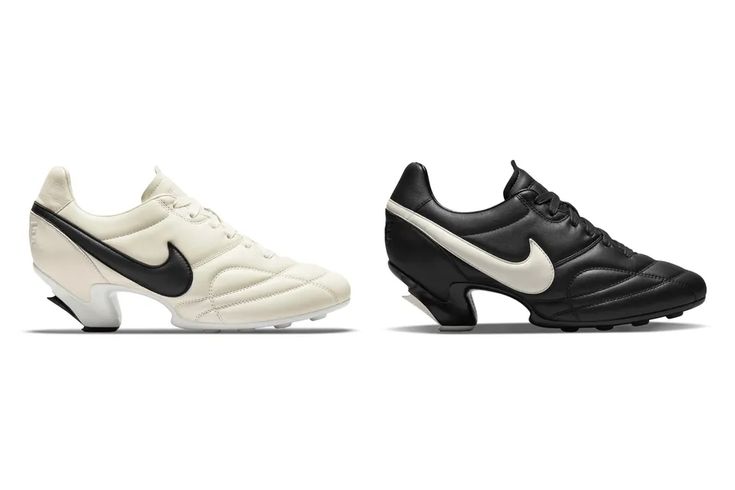
✦ Nike
✦ Supreme
✦ CDG x Stüssy
Each one a bridge between street and intellect — where art met sneakers.
But even PLAY wasn’t about profit.
It was Rei Kawakubo’s secret door — inviting the next generation to question normal.
“I want to make something you cannot understand immediately,” Rei said.
⚡ DOVER STREET MARKET — RETAIL REWIRED
Not a store. A system.
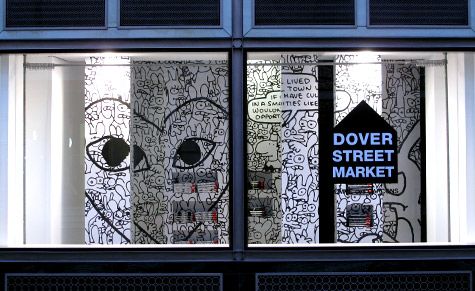
Rei’s Dover Street Market (2004 → London, then Tokyo, NY, Beijing) redefined what retail could be.
Each floor changed seasonally — curated chaos.
Fashion next to art, next to sculpture, next to nothing.
No hierarchy. Just flow.
It felt like walking through Rei’s brain — a conversation between commerce and concept.
💥 2010s → FASHION AS ART, ART AS FASHION
Rei Kawakubo left the idea of “clothing” behind.
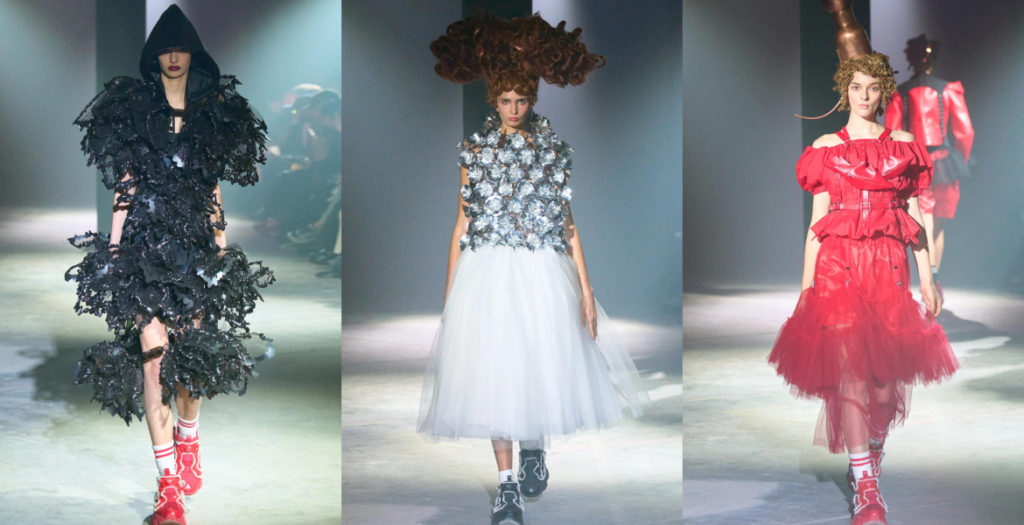
Her shows became installations.
Her silhouettes, sculptures.
Her models, vessels.
The Met Gala 2017 honored her with “Rei Kawakubo / Art of the In-Between.”
Few designers have been alive to see their work in that museum.
Fewer still changed fashion enough to earn it.
She doesn’t speak much.
But her clothes shout quietly:
→ Be different.
→ Be difficult.
→ Be free.
⚫ TOKYO NOW — THE AFTERGLOW
Today, Tokyo still vibrates with comme des garcons’ DNA.
From Shibuya’s chaos to Aoyama’s minimalism, the contrast is Rei’s echo.
Independent designers, thrift subcultures, underground fashion labs — all draw from her gravity.
The Tokyo underground didn’t die.
It evolved.
It became the rhythm of global style.
When you wear black on black on black,
you’re not being minimal —
you’re being Kawakubo.
🕶️ REI KAWAKUBO — THE INVISIBLE GODDESS
No interviews. No social media. No spectacle.
Only work.
Rei Kawakubo doesn’t explain her collections.
She lets them breathe ambiguity.
She once said:
“The only way to find new ideas is to not look for them.”
That’s how she keeps comme des garcons alive — by never chasing, never following, never stopping.
⚡ LEGACY MODE: ALWAYS UNDERGROUND
comme des garcons began in Tokyo’s backstreets and now shapes fashion’s main streets.
But it never lost its subcultural pulse.
Every distressed hem, every asymmetric cut, every anti-fashion collection that came after — Margiela, Rick Owens, Vetements — all owe something to Rei.
Her legacy isn’t about beauty.
It’s about bravery.
comme des garcons didn’t make fashion cool.
It made thinking cool.